Sign and display work fills most UV flatbed pipelines. Exhibition graphics, rigid signage, retail POS material. The workflow is established, the clients are familiar, the margins are known. The problem is that many flatbed owners are standing next to a machine capable of serving an entirely different market with significantly higher average job values, and they have not noticed.
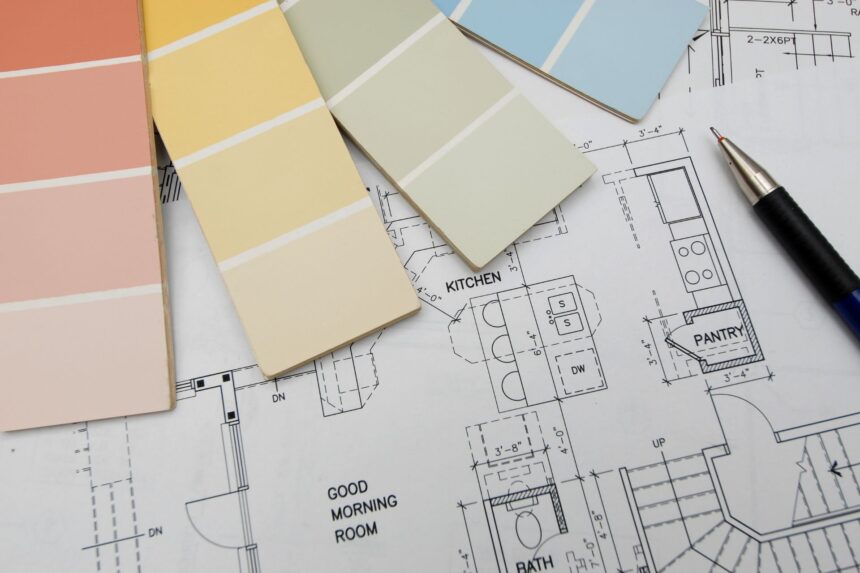
Interior decoration is one of the biggest untapped opportunities in UV flatbed printing. The materials used in UV flatbed printing interior decoration (rigid board, aluminium composite, glass, acrylic, MDF, and foam board) overlap almost completely with those used in commercial and residential fit-outs. The clients buying printed surfaces for interior applications often work with budgets far beyond standard sign shop accounts. Yet many have no idea their local print supplier could produce what they need, simply because most print businesses have not positioned themselves to offer interior-focused print solutions.
What Interior Print Applications Actually Look Like
Decorative wall panels are the entry point. Hotels, restaurants, and corporate offices commission large-scale printed panels for reception areas, dining spaces, and feature walls on a regular basis. These are high-value, often short-run briefs, sometimes single pieces, which suits flatbed production precisely because the economics do not depend on long-run volume. A single panel job for a hotel refurbishment can represent more revenue than a full week of standard rigid signage work.
Direct printing onto glass and acrylic is harder to replicate than it looks, and that is part of its commercial value. Vinyl-wrapped acrylic partitions are common in shopfitting and office design. Directly printed acrylic panels with the clarity and depth that printing through vinyl cannot match are not. A print business with the capability to produce them is offering something the majority of local competitors cannot supply. Applications include shopfitting, office partitioning, bespoke decorative features in hospitality environments, and high-specification residential projects.
Printed furniture components are a third area most flatbed owners have not approached. Modular furniture manufacturers and bespoke joinery businesses regularly need printed board panels for personalisation and branding at the component level, before assembly. Printing directly onto MDF, ply, or veneered board is technically straightforward for a UV flatbed. It is a market that almost no print businesses are actively working.
Who Is Actually Buying Interior Print Work
Interior designers are the gateway. They specify materials and surface finishes across multiple projects and are looking for suppliers who can deliver printed surfaces without routing them through multiple vendors. A print business that can offer direct-to-substrate production across interior-relevant materials is a supplier an interior designer wants on their approved list. The relationship tends to repeat. Interior designers work project by project, and a supplier that performs on one project gets considered for the next.
Hotel and restaurant groups commission fit-out work at a scale and frequency that bears no resemblance to the sign shop market. A single hotel refurbishment involving printed reception panels, corridor feature walls, and bespoke decorative elements can run to a project value that most sign shops would not see across two or three months of mixed signage work. These clients have the budget. They are not thinking about print businesses as potential suppliers because print businesses have not approached them.
Retail fit-out contractors are a third route in. Brands investing in physical retail space are replacing standard finishes with printed surface materials in branded zones and pop-up environments. A retailer rolling out a new store format across twenty sites generates significant flatbed print volume at a specification level that requires a serious machine to produce it.
Can a UV Flatbed Printer Print on Wood and Other Interior Surfaces?
Yes. UV flatbed printers print directly onto MDF, plywood, veneered board, solid timber, and laminate panels. The UV-cured ink bonds chemically to the surface rather than relying on absorption, which is how it achieves adhesion on non-porous materials like glass and metal.
For rough or unfinished timber, surface preparation improves adhesion and colour consistency. For engineered timber products like MDF and ply, the surface is typically consistent enough to print directly without preparation in most cases.
The Canon Arizona 480 GT is specifically well-suited to interior print applications because its white ink channel enables printing on dark substrates with full colour accuracy on top. Without white ink, printing on dark timber or coloured acrylic produces washed-out results because the substrate colour shows through the ink layers. With it, the colour output is independent of the substrate colour, which opens the full range of interior material choices. For more insight into how white ink can unlock new revenue opportunities, read our dedicated article or explore our resource hub for more practical guidance.
How to Get into This Market
Build a sample portfolio of physical pieces first. Interior designers and fit-out contractors make decisions based on what they can see and hold. A set of printed panels in interior-relevant materials (dibond, acrylic, MDF, veneered board) is a more effective sales tool in this market than any website or brochure. The samples need to demonstrate the quality level the market expects. Average samples position you as an average supplier.
Then contact interior designers and fit-out contractors directly. This market does not come to you. The clients are not searching for UV flatbed printers. They are sourcing solutions to specific material challenges on specific projects, and a print business that positions itself as a supplier of interior print solutions, and backs that positioning with physical evidence of the work, can walk into accounts that have no existing supplier relationship for this type of output.
Most flatbed owners operating the right machine have not approached this market. That absence is the commercial opportunity.
Find out what your flatbed printer can produce for the interior market
The Canon Arizona range is built for the kind of precision and substrate versatility that interior print applications demand. Explore our full range of products today or contact us for expert advice.