Most buyers spend weeks researching the purchase price of a UV flatbed printer and considerably less time understanding what it costs to run. That is the wrong way around. The purchase price is fixed. The UV flatbed printer running costs determine whether the machine is profitable. Once you know the numbers, the case for investment becomes clearer, not less.
UV flatbed printing has some of the strongest gross margins in production print. The businesses that understand their cost model from day one price their work correctly, take on the right jobs, and build a profitable operation quickly. The ones that do not tend to underprice, squeeze their own margins, and wonder why a machine with real capability is underperforming. Here is how to build the model properly.
What Goes Into the Running Cost
The running cost of a UV flatbed printer divides into four areas: ink, maintenance and print head replacement, electricity, and labour. Each is predictable. None is fixed in the way a lease payment is fixed. They scale with output, which means they scale with revenue, and that relationship is what makes the model work.
Ink Costs and What They Mean Per Job
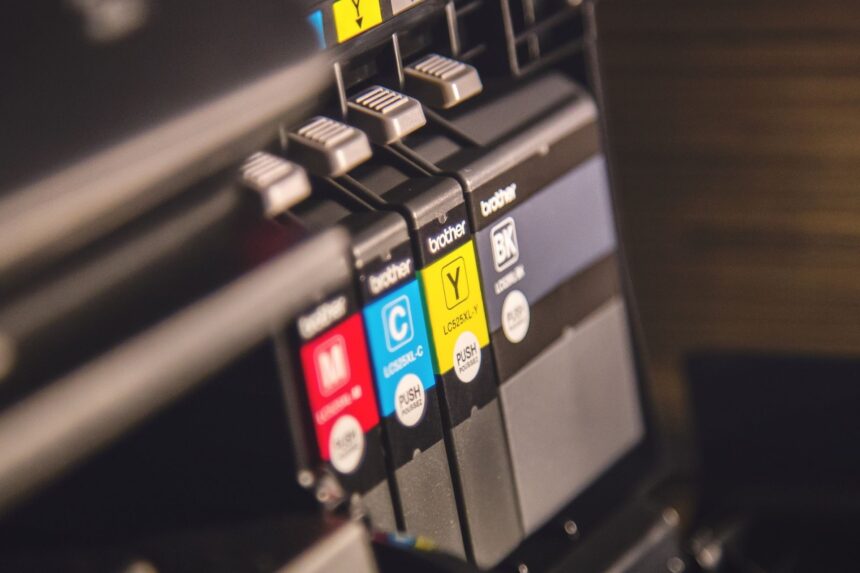
UV inks for production flatbed printers cost between £22 and £28 per litre. At standard print density, one litre covers approximately 70 to 100 square metres of output, which puts your ink cost at roughly £0.25 to £0.40 per square metre for a standard CMYK job.
Set that against the market rate. UV flatbed print in the UK sells at £12 to £25 per square metre depending on substrate, run length, and finish. At £0.40 per square metre in ink against a selling price of £15, your ink cost is less than 3% of the revenue that job generates. The model works because the ink cost is predictable and low relative to what the market pays.
White ink changes the calculation slightly. Achieving full opacity on dark or transparent substrates often requires multiple passes, which increases ink volume per square metre. But white ink jobs command premium pricing precisely because most print businesses cannot produce them. If your machine has the capability, as the Canon Arizona 480 GT does with its dedicated white ink channel, you are not absorbing a higher ink cost. You are accessing a higher-value job type that general print businesses cannot touch.
UV varnish works the same way. The varnish pass adds a per-square-metre cost, and the finished result, whether gloss, matte, or textured, commands a price that more than covers it. Buyers who factor in white ink and varnish capability when they choose their machine are choosing access to better-margin work, not just additional features.
Maintenance, Print Heads and What to Budget
Print head replacement is the largest single maintenance cost on a UV flatbed printer, and it is the one that catches buyers off guard when they have not planned for it. Replacement cost per head runs at £400 to £1,750 depending on the machine, and a production flatbed carries multiple heads.
The position on Canon Arizona hardware is encouraging. The automated printhead maintenance system actively protects head performance between jobs and reduces manual intervention. Following the daily maintenance protocol is the single most effective thing a print business can do to extend head life and push that replacement cost further into the future. The machine is designed to look after itself when you look after it.
Annual maintenance contracts run at £1,000 to £3,000 per year. Factored into a monthly cost model, that is £80 to £250 per month. Set against the revenue a production flatbed generates at scale, it is a small and entirely predictable cost.
Canon Arizona machines use UV LED curing rather than traditional UV mercury lamps. UV LED draws less power, has a considerably longer operational lifespan, and does not carry the lamp replacement costs that older UV flatbed technology generates. For buyers comparing current Canon Arizona hardware against older alternatives, this is a real running cost advantage that compounds over the life of the machine.
Electricity and Labour
A production UV flatbed draws between 800W and 3kW during operation. At current UK commercial electricity rates of approximately 25p per kWh, an eight-hour shift costs between £1.60 and £6.00. Across 250 working days, that is £400 to £1,500 per year. Worth knowing, but not the cost driver in this model.
Labour is more significant. A skilled flatbed operator earns £15 to £20 per hour. At a single-operator setup running an eight-hour day, that is £120 to £160 in daily labour. The machine needs to generate enough output to make that a small fraction of revenue. At production volume and the margins UV flatbed work commands, it does.
Putting the Numbers Together
On a mid-range job at moderate volume, say 200 square metres of standard CMYK print per day across a range of rigid substrates, the daily cost picture looks like this. Ink sits at roughly £60 to £80. Electricity adds £3 to £6. A proportional maintenance allocation adds another £20 to £30. Labour for one operator is £120 to £160. Total daily running cost: approximately £200 to £275.
At a conservative selling price of £15 per square metre, 200 square metres generates £3,000 in revenue. The gross margin on that output, before overheads, sits above 90%. Even after factoring in consumables, substrate costs, and overhead allocation, a well-run UV flatbed operation consistently delivers gross margins of 60 to 80% on production work. Add white ink or varnish jobs at premium rates and the average across a mixed job portfolio improves further.
That is why understanding the running costs is not a reason to hesitate. It is the reason to move forward with confidence.
Talk to Let’s Print Now About the Right Flatbed for Your Business
The numbers work across the Canon Arizona range, from the Arizona 460 GT for businesses entering flatbed production to the 6170 XTS for operations where output speed is the main driver of profitability. The right machine is the one that matches your production goals and gives you access to the job types that fit your market.
Get in touch with the Let’s Print Now team to talk through which model fits your setup and what the running cost model looks like at your specific volume.