Roll-to-roll printers are the backbone of many sign and display businesses. They handle banners, vehicle wraps, wall graphics, and vinyl applications efficiently and affordably. But if your clients are increasingly asking for rigid signage, direct-to-substrate prints, and materials that a roll-fed system cannot accommodate, you have reached the point where a flatbed printer becomes a serious consideration.
Making the move from roll-to-roll vs flatbed printing is not just an equipment swap. It changes what you can offer, how your workflow operates, and where your revenue comes from. This guide covers what you need to know before making that decision.
What a Flatbed Printer Does That Roll-to-Roll Cannot
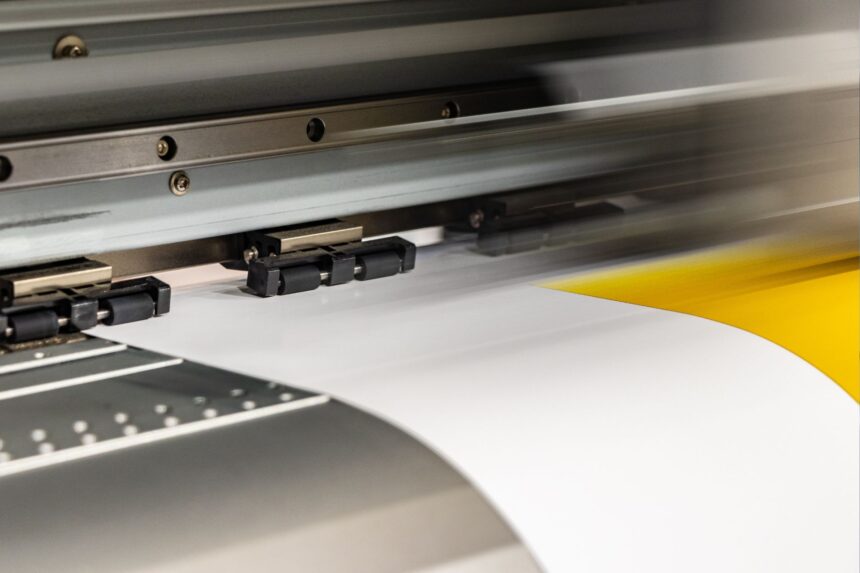
A roll-to-roll printer feeds flexible media from a roll, prints onto it, and re-rolls the output. It is designed for materials like vinyl, banner, fabric, and other flexible substrates. A flatbed printer holds materials flat on a vacuum table and prints directly onto the surface. This fundamental difference in roll-to-roll vs flatbed printing comes down to what each machine can handle.
Flatbed printers work with rigid substrates that cannot be fed through rollers: foam board, acrylic, aluminium composite panels, MDF, wood, corrugated board, PVC sheets, glass, and other solid materials. If a client hands you a 10mm acrylic panel and wants a graphic printed directly onto it, a roll-to-roll printer cannot do that. A flatbed can.
UV flatbed printers also cure ink instantly on the substrate, producing durable, scratch-resistant output that is ready to handle immediately. There is no lamination step for standard applications, no drying time, and no risk of the print smudging during post-processing. For production efficiency, that instant cure is a meaningful advantage.
Will You Replace Your Roll-to-Roll or Add Alongside It?
Most businesses moving into flatbed printing keep their roll-to-roll equipment. The two systems serve different markets. Your roll-to-roll printer continues handling flexible media work: banners, wraps, wall and floor graphics, PVC-free alternatives, and textile applications. Your flatbed takes over rigid substrates, direct-to-board signage, and applications where printing directly onto the final material is required.
Running both systems expands your capability without sacrificing what already works. The roll-to-roll handles volume and flexible work. The flatbed handles rigid media and speciality applications. Together, they cover a wider market than either machine alone.
Substrate Considerations
Before choosing a flatbed printer, audit the materials your clients request most frequently. Standard sign and display substrates like 3mm and 5mm foam board, foamex, and aluminium composite are handled by every professional UV flatbed system. If you regularly work with thicker materials, speciality substrates, or non-standard sizes, check the machine’s specifications against your actual requirements.
The Canon Océ Arizona 460 GT, for example, is optimised for industry-standard 8ft x 4ft sheets and handles the full range of common rigid substrates used in sign and display production. It is a practical first flatbed for businesses that need reliable output on the materials that make up the majority of rigid media work.
Roll-to-Roll vs Flatbed Printing: Workflow Changes to Expect
Flatbed printing introduces different workflows compared to roll-to-roll. Loading and unloading rigid sheets is a manual process (or semi-automated on larger systems). Job setup involves positioning material on the vacuum table and confirming print alignment. The physical handling of rigid substrates requires more space around the machine than a roll-fed system.
On the positive side, flatbed printing typically involves fewer post-processing steps. Direct-to-substrate output often eliminates the need for mounting printed vinyl onto boards, a process that adds labour time, material cost, and waste to every rigid sign produced via roll-to-roll.
For businesses currently printing vinyl on a roll-to-roll and then mounting it onto rigid substrates for signage, switching that workflow to direct flatbed printing can reduce per-unit cost and production time significantly.
Cost and Return on Investment
A professional UV flatbed printer is a larger investment than most roll-to-roll systems. The return comes from three places: new revenue from work you could not previously produce in-house, cost savings from eliminating mounting and lamination on rigid signage, and margin improvement from offering direct-to-substrate prints as a premium service.
Calculate the value of rigid media work you currently outsource, the labour and materials you spend on vinyl mounting, and the premium pricing available for direct-to-substrate output. For many sign and display businesses, these numbers justify the investment within the first year of operation.
Choosing Your First Flatbed Printer
If this is your first step into flatbed printing, prioritise reliability, substrate compatibility, and operating cost over maximum speed or feature count. A proven platform with a solid track record in commercial production environments will serve you better than an untested machine with impressive specifications on paper.
The Canon Océ Arizona 460 GT is a strong first flatbed for sign and display businesses. It runs on a proven, well-established Canon Arizona platform, handles standard rigid media formats, and uses VariaDot imaging for professional output quality. As your flatbed production grows, the Canon Arizona 480 GT and Canon 6170 XTS offer upgrade paths with additional ink capabilities and higher throughput.
Considering your first flatbed printer? Talk to our team. Call 01695 280740 or get in touch for honest, specialist advice.