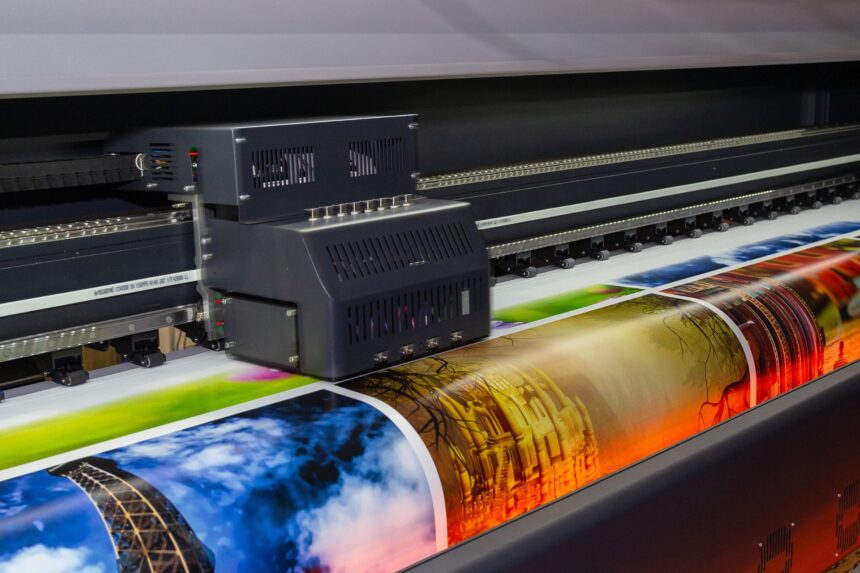
When to Upgrade to an Industrial Flatbed Printer
An industrial flatbed printer is a significant investment. It takes up more floor space, costs more to buy and run, and changes the scale of your production capability. Upgrading too early wastes capital. Upgrading too late costs you work, clients, and margin. Timing matters.
This article covers the practical signs that your print business has outgrown mid-range flatbed equipment, and when stepping up to an industrial system like the Canon 6170 XTS makes genuine commercial sense.
You Are Regularly Turning Down Work
This is the clearest signal. If jobs are coming in that your current flatbed printer cannot handle because of volume, format size, or turnaround requirements, you are losing revenue. Worse, you are sending those clients to competitors who can say yes.
Track the work you decline or outsource over a quarter. If the value of lost jobs starts approaching the cost of upgraded equipment, the financial case builds quickly. Industrial flatbed printers like the Canon 6170 XTS exist precisely for businesses at this crossover point.
Your Lead Times Are Stretching
When your machine is maxed out, lead times creep up. Jobs that used to take two days now take four. Clients start asking questions. Sales staff stop quoting aggressive turnarounds because they know the production schedule is full.
Extended lead times are a hidden cost. They do not show up on a balance sheet, but they erode client confidence and push repeat business elsewhere. If your current flatbed printer is the bottleneck causing extended delivery times, more operator hours or overtime shifts are a short-term fix. The lasting solution is a machine with genuinely higher throughput capacity.
You Are Running Overtime or Double Shifts
If your flatbed printer runs overtime regularly to meet standard demand, that is not a sign of success. It is a sign of under-capacity. Overtime increases labour costs, accelerates equipment wear, and reduces the margin on every job produced during extended hours.
An industrial flatbed printer processes more sheets per hour during standard working hours. The increased throughput often eliminates the overtime entirely, recovering labour costs that offset the equipment investment. For businesses already paying significant overtime, the ROI on an upgrade can be faster than expected.
Print Quality Drifts on Long Runs
Mid-range flatbed printers perform well for moderate production volumes. Push them beyond their designed capacity and quality consistency starts to suffer. Colours shift slightly between the first sheets and the last. Fine detail softens. Customers who ordered 200 identical panels notice when panel 150 does not match panel 10.
Industrial flatbed systems are engineered specifically for extended production runs. Automated maintenance, more robust printhead systems, and stable ink delivery ensure consistent output from start to finish. If quality drift is costing you reprints or client complaints, it is a capacity problem your current machine was not designed to solve.
Your Substrate Range Has Expanded
Business growth often brings new substrate requirements. Clients want printing on materials your current machine handles poorly or not at all. Oversized panels, thicker substrates, or multiple boards per load cycle start to define your daily workflow.
The Canon 6170 XTS has a larger flatbed area that accommodates oversized media and allows multiple standard boards to be printed simultaneously. For businesses where loading and unloading time between single sheets has become a production bottleneck, that additional bed capacity translates directly to higher daily output.
The Financial Case for Upgrading
An industrial flatbed printer is not an impulse purchase. Build the business case around real numbers: the value of work you currently turn down, the overtime costs you currently pay, the reprints caused by quality issues, and the lead time improvements that protect client retention.
Consider the machine’s expected lifespan. Canon Arizona systems are recognised for operational longevity. A well-maintained industrial flatbed printer serves a business for years of daily production, spreading the investment across a long productive life.
Once you’ve upgraded your printer, following a regular UV flatbed printer maintenance routine will help maximise uptime, maintain print quality, and extend the life of your investment.
At Let’s Print Now, we supply the Canon 6170 XTS alongside the Canon Arizona 480 GT and Canon Océ Arizona 460 GT. We can help you assess whether an industrial upgrade is the right move for your business, or whether a different system better matches your current trajectory.
Call 01695 280740 or use our enquiry form to start the conversation.